



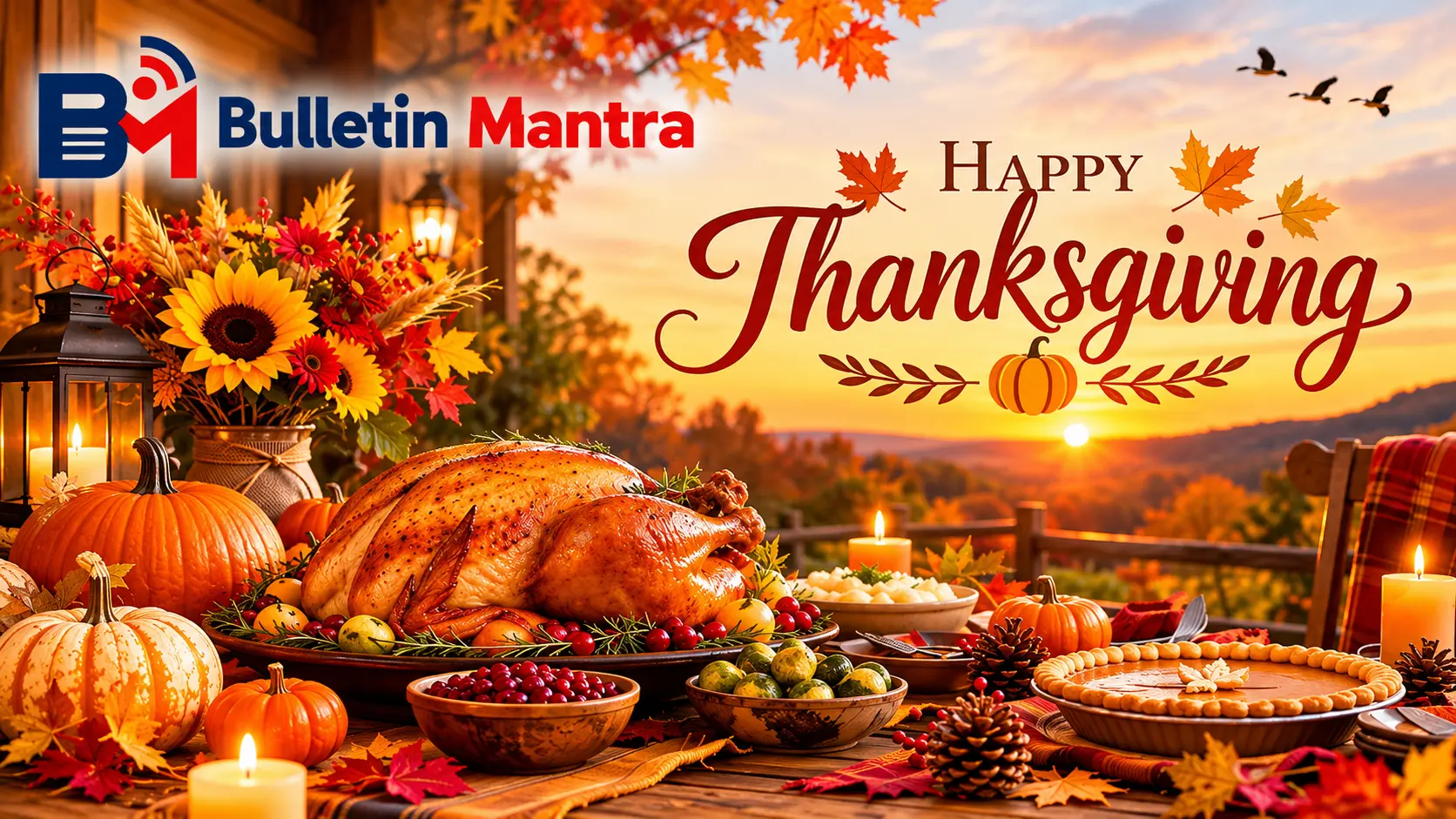
Imagine a dining table filled with delicious food, family members sitting together, children enjoying the festive atmosphere, and everyone taking a moment to appreciate the good things in life. This is the spirit of Thanksgiving.
Celebrated primarily in the United States and Canada, Thanksgiving is a festival associated with gratitude, family reunions, harvest traditions, and sharing meals. However, its meaning and customs are not limited to North America. Several other countries and regions also observe their own Thanksgiving or harvest-related celebrations, each with a different historical and cultural background.
While millions of Americans prepare for Thanksgiving in November, Canadians celebrate it in October. Countries such as Liberia and Grenada also have officially recognised Thanksgiving observances, although their historical origins are different.
Thanksgiving 2026 will be celebrated on November 26 in the United States and October 12 in Canada.
But what is the real story behind this festival? Why did it begin, what beliefs are associated with it, and how do different countries celebrate it?
Let’s explore everything you need to know about Thanksgiving 2026.
What Is Thanksgiving?
Thanksgiving is an annual celebration dedicated to expressing gratitude for the blessings, opportunities, food, good health, family, and achievements people have received throughout the year.
The festival is traditionally associated with giving thanks for a successful harvest. Over time, it developed into a broader celebration of appreciation, togetherness, generosity, and community.
In the United States, Thanksgiving is a federal public holiday celebrated on the fourth Thursday of November. Families and friends traditionally gather for a special meal, which commonly includes roasted turkey, mashed potatoes, stuffing, cranberry sauce, vegetables, and pumpkin pie.
In Canada, Thanksgiving is celebrated on the second Monday of October. Its historical association is also closely connected with harvest celebrations and gratitude for the year’s blessings.
Although Thanksgiving has religious and historical roots, people from different religious backgrounds also celebrate it as a cultural and family occasion.
Thanksgiving 2026: Date, Day and Important Details
Thanksgiving is not celebrated on the same date in every country. Its timing depends on the country’s history, traditions, and official calendar.
Here are the important dates for Thanksgiving 2026:
| Country/Region | Thanksgiving Date 2026 | Day |
|---|---|---|
| United States | November 26, 2026 | Thursday |
| Canada | October 12, 2026 | Monday |
| Liberia | November 5, 2026 | Thursday |
| Grenada | October 25, 2026 | Sunday |
| Norfolk Island | November 25, 2026 | Wednesday |
Note: These dates refer to the respective countries’ or territories’ recognised observances, not a single worldwide Thanksgiving holiday.
The American and Canadian celebrations are the best-known Thanksgiving holidays, while other countries observe their own versions for different historical or cultural reasons.
History of Thanksgiving: Where Did It Actually Begin?
The history of Thanksgiving is more complex than the popular story of a meal shared between European settlers and Native Americans.
To understand the festival, we need to look at two important historical developments: Indigenous harvest traditions and the establishment of Thanksgiving as a national holiday in the United States.
1. The 1621 Harvest Celebration
One of the most widely remembered events associated with Thanksgiving took place in the autumn of 1621 in Plymouth, present-day Massachusetts, USA.
English settlers, commonly known as the Pilgrims, celebrated a successful harvest. Members of the Wampanoag people also participated in the gathering. Historical accounts suggest that approximately 52 English settlers and at least 90 Wampanoag people attended the event.
The Wampanoag had an important role in helping the settlers survive by sharing agricultural knowledge and other resources.
However, it is important to understand that this gathering was not necessarily the friendly, peaceful celebration often portrayed in traditional Thanksgiving stories. It also involved political relationships, diplomacy and strategic alliances between the two communities.
Furthermore, Indigenous communities had been practising their own harvest ceremonies and expressions of gratitude long before European settlers arrived in North America.
2. George Washington’s Thanksgiving Proclamation in 1789
Thanksgiving gradually became associated with public expressions of gratitude.
On October 3, 1789, the first US President, George Washington, issued a proclamation declaring November 26, 1789, a national day of thanksgiving and prayer.
It was an important milestone in establishing Thanksgiving as a recognised national observance under the new US Constitution.
However, it did not immediately become an annual holiday with a fixed date.
3. Abraham Lincoln Made Thanksgiving a National Tradition in 1863
Another major turning point came during the American Civil War.
The country was experiencing serious political divisions, violence and uncertainty. In October 1863, President Abraham Lincoln issued a proclamation calling on Americans to observe a national day of thanksgiving on the last Thursday of November.
His intention was not simply to encourage people to celebrate a harvest. The proclamation also reflected the need for national unity, hope, peace and gratitude during a difficult period.
This decision helped establish Thanksgiving as a nationwide American tradition.
4. When Did Thanksgiving Become a Fixed Holiday?
The date of Thanksgiving changed several times throughout American history.
In 1939, President Franklin D. Roosevelt moved the celebration to the second-to-last Thursday of November to extend the Christmas shopping season.
This decision created confusion because some states followed the new date while others continued observing the traditional one.
Finally, in 1941, Congress passed legislation establishing Thanksgiving on the fourth Thursday of November.
This is the date followed in the United States today.
Why Is Thanksgiving Celebrated? Understanding the Belief Behind It
Thanksgiving is celebrated for several reasons, and its meaning can differ between individuals, communities and countries.
At its heart, the festival represents appreciation for what people have received and recognition of the people and circumstances that make their lives meaningful.
Here are the major beliefs and values associated with Thanksgiving.
1. Expressing Gratitude to God
For many people, Thanksgiving has a religious significance.
They believe that their food, health, family, opportunities and achievements are blessings from God. Therefore, the occasion becomes an opportunity to offer prayers and express appreciation.
Religious communities may organise special services in churches, while families may begin their meals with prayers.
However, not everyone celebrates Thanksgiving for religious reasons. Many people observe it as a secular cultural festival.
2. Celebrating a Successful Harvest
Historically, harvest celebrations were important because agricultural communities depended on successful crops for their survival.
A good harvest meant sufficient food, economic stability and preparation for the coming winter.
Thanksgiving became associated with celebrating the fruits of agricultural labour and appreciating the natural resources that sustain human life.
3. Spending Time With Family and Friends
Modern Thanksgiving is strongly associated with family reunions.
People travel long distances to meet their parents, grandparents, relatives and friends. For some, it is one of the most important family gatherings of the year.
The traditional Thanksgiving dinner represents togetherness, sharing and appreciation.
4. Helping People in Need
Generosity is another important part of Thanksgiving.
Many individuals, charities and community organisations use the occasion to distribute food, organise community meals and support people who cannot afford a festive dinner.
The idea is simple: gratitude should not remain limited to words; it should also inspire people to help others.
5. Remembering History and Cultural Traditions
Thanksgiving also provides an opportunity to understand a country’s history, cultural identity and relationship with agriculture.
At the same time, modern discussions increasingly recognise Indigenous perspectives and the complicated historical experiences behind the traditional story of the first Thanksgiving.
Which Countries Celebrate Thanksgiving? Traditions Around the World
Thanksgiving is not exclusively an American celebration. Several countries and territories have their own officially recognised Thanksgiving observances or cultural festivals centred on gratitude, harvest and community.
However, it is important to distinguish between countries that officially celebrate a holiday called Thanksgiving and countries that observe similar harvest or gratitude festivals.
Let’s look at some important examples.
1. United States – The Biggest Thanksgiving Celebration
The United States has the world’s most internationally recognised Thanksgiving celebration.
When: Fourth Thursday of November.
Date in 2026: November 26.
Americans celebrate Thanksgiving by gathering with family and friends, preparing traditional meals and participating in community activities.
Some of the most popular traditions include:
- Turkey dinner: Roasted turkey is the most recognised Thanksgiving food.
- Family gatherings: Relatives travel to spend time together.
- Thanksgiving parades: The Macy’s Thanksgiving Day Parade in New York City is a famous annual event.
- American football: Watching football games is a popular Thanksgiving tradition.
- Charity activities: Food banks and charitable organisations distribute meals to people in need.
- Gratitude traditions: Families may share what they are thankful for before eating.
Thanksgiving is also closely connected with the beginning of the American holiday shopping season, with Black Friday taking place the following day.
2. Canada – Thanksgiving Celebrated in October
Canada celebrates Thanksgiving earlier than the United States.
When: Second Monday of October.
Date in 2026: October 12.
Canadian Thanksgiving is traditionally associated with the autumn harvest and appreciation for food, family and the natural environment.
Its historical background is different from the American Thanksgiving story.
One early European thanksgiving ceremony in what is now Canada was organised by explorer Martin Frobisher in 1578 after his expedition survived a difficult journey.
Canada began observing Thanksgiving annually in 1879, although its date changed over the years. Since 1957, it has been celebrated on the second Monday of October.
Common traditions include:
- Family dinners featuring turkey and seasonal vegetables.
- Pumpkin and apple desserts.
- Visiting relatives and friends.
- Enjoying autumn landscapes and outdoor activities.
- Giving thanks for the year’s blessings.
The festival is particularly associated with the autumn harvest season, which arrives earlier in Canada than in much of the United States.
3. Liberia – Thanksgiving With Religious Significance
Liberia is another country where Thanksgiving is an officially recognised national holiday.
When: First Thursday of November.
Date in 2026: November 5.
Liberia’s Thanksgiving tradition has historical connections with the country’s establishment and its relationship with freed African Americans who settled there.
Unlike the traditional American harvest celebration, Liberian Thanksgiving has a particularly strong religious and national significance.
According to Liberia’s Ministry of Foreign Affairs, the National Legislature enacted a law in 1883 declaring the first Thursday of November as National Thanksgiving Day.
The day encourages people to gather in places of worship, including churches and other religious institutions, to offer prayers and express gratitude for the country’s blessings, protection and continued progress.
Its meaning includes:
- Thanking God for life and protection.
- Praying for national peace and stability.
- Expressing gratitude for blessings.
- Celebrating community and religious unity.
Liberia’s Thanksgiving is a good example of how the same concept can develop into a different cultural tradition in another country.
4. Grenada – Thanksgiving Day With a Different Historical Meaning
Grenada also observes a national holiday called Thanksgiving Day.
When: October 25.
Date in 2026: October 25.
However, its historical meaning is very different from the American and Canadian celebrations.
Grenada’s Thanksgiving Day commemorates the events surrounding the US-led military intervention in October 1983, following a period of political instability and the killing of Prime Minister Maurice Bishop.
The holiday is associated with the historical events of that period and the intervention that followed. It is not a traditional harvest festival or a celebration originating from the 1621 Plymouth gathering.
This distinction is important when discussing Thanksgiving around the world because the same holiday name can have entirely different historical meanings.
5. Norfolk Island – Thanksgiving Influenced by American Traditions
Norfolk Island, an Australian external territory, has its own Thanksgiving tradition.
When: Last Wednesday of November.
Date in 2026: November 25.
The tradition is associated with American whalers who visited the island and introduced aspects of American Thanksgiving customs.
Over time, the celebration developed into a local cultural tradition.
Its observance is different from Australia’s national public holidays and should not be confused with a nationwide Australian Thanksgiving holiday.
Countries That Celebrate Similar Harvest and Gratitude Festivals
Not every country that celebrates gratitude has an official holiday called Thanksgiving.
Several nations have their own traditional festivals that share similar themes, including harvest celebrations, family reunions, prayers and appreciation for ancestors.
Here are some important examples.
Germany – Erntedankfest
Usually observed around the first Sunday of October, Erntedankfest is a Christian harvest thanksgiving celebration. Churches and communities decorate with crops, fruits, vegetables and agricultural produce to express gratitude for the harvest.
Japan – Labor Thanksgiving Day
Celebrated on November 23, this national holiday recognises labour, production and mutual appreciation among people. It has historical connections with the traditional harvest observance called Niiname-sai.
South Korea – Chuseok
One of Korea’s most important traditional holidays, Chuseok is associated with the autumn harvest, family reunions and honouring ancestors. Families prepare traditional foods and perform ancestral memorial rituals.
Saint Lucia – Thanksgiving Day
Saint Lucia observes a harvest-related Thanksgiving Day on the first Monday of October. It is associated with gratitude, religious observances and the harvest season.
These celebrations have their own histories and should not be treated as direct versions of American Thanksgiving.
Where Can Thanksgiving Be Celebrated?
Thanksgiving is not restricted to a particular location or religious institution. People can celebrate it wherever they want to express gratitude and spend time with others.
Depending on local customs, celebrations can take place in:
- At home: Families prepare special meals, invite relatives and share what they are thankful for.
- Churches and religious institutions: People attend prayer services and express gratitude for their blessings.
- Community centres: Organisations arrange shared meals and gatherings for local residents.
- Restaurants and hotels: Many hospitality businesses organise special Thanksgiving dinners and festive menus.
- Schools and colleges: Educational institutions may organise cultural activities, discussions and gratitude-themed events.
- Charitable organisations: Volunteers arrange food drives and community kitchens to help people in need.
- Public spaces: Some cities organise parades, cultural programmes and seasonal events.
Can Thanksgiving Be Celebrated in India?
Yes! Although India does not have an officially recognised national Thanksgiving holiday like the United States or Canada, individuals and communities can celebrate it privately.
People living in India can organise Thanksgiving dinners, meet family members, visit religious institutions, volunteer for charitable activities or simply express gratitude towards people who have supported them.
Hotels, restaurants, international communities and some churches may also organise Thanksgiving-themed events, particularly in major cities.
The underlying message of Thanksgiving—gratitude, generosity and togetherness—is universal and can be practised regardless of nationality.
What Are the Traditional Foods Eaten on Thanksgiving?
Food is one of the most recognisable parts of Thanksgiving, particularly in the United States and Canada.
Families prepare special meals using seasonal ingredients and traditional recipes. Although the menu varies between households, some dishes have become strongly associated with the festival.
| Traditional Food | Significance / Description |
|---|---|
| Roasted Turkey | The most recognisable Thanksgiving main course |
| Mashed Potatoes | A popular side dish served with gravy |
| Cranberry Sauce | A sweet and tangy accompaniment |
| Stuffing | Bread-based dish often prepared with herbs and vegetables |
| Pumpkin Pie | Traditional autumn dessert |
| Sweet Potatoes | Commonly served roasted or as a casserole |
| Cornbread | A popular traditional bread |
| Apple Pie | Another favourite seasonal dessert |
Interestingly, the exact menu served at the 1621 Plymouth gathering is not fully known. Historical accounts mention wildfowl and venison, but the modern Thanksgiving menu developed over many generations.
Therefore, it would be inaccurate to claim that the traditional turkey dinner served today was exactly what people ate at the first Thanksgiving.
Thanksgiving and Native American Communities: The Other Side of the Story
While Thanksgiving is widely associated with gratitude and family celebrations, its historical background also includes difficult experiences for Indigenous communities.
The traditional American story often presents the 1621 gathering as a peaceful meeting between Pilgrims and Native Americans. However, this simplified version leaves out important historical details.
The Wampanoag people had lived in the region long before the arrival of English settlers. They had their own agricultural practices, cultural traditions, political structures and systems of expressing gratitude.
Their relationship with the English settlers involved diplomacy and strategic cooperation. Unfortunately, peaceful relations did not last, and subsequent colonial expansion brought conflict, displacement and devastating consequences for Indigenous communities.
For this reason, some Native Americans view Thanksgiving differently.
In 1970, the United American Indians of New England established an annual National Day of Mourning in Plymouth, Massachusetts. It takes place on Thanksgiving Day and provides an opportunity to remember Indigenous history, honour ancestors and raise awareness about the consequences of colonisation.
This perspective is an important part of understanding Thanksgiving’s complete history. Native Knowledge 360°+2
How Is Thanksgiving Different From Other Harvest Festivals?
People often confuse Thanksgiving with other harvest festivals because both involve gratitude, food and celebrations.
However, their origins, dates and cultural meanings can be quite different.
| Festival | Country | Main Purpose | Usual Celebration Period |
|---|---|---|---|
| Thanksgiving | USA | Gratitude, family and harvest traditions | November |
| Thanksgiving | Canada | Gratitude and autumn harvest | October |
| Chuseok | South Korea | Harvest, family and ancestral remembrance | September or October |
| Erntedankfest | Germany | Giving thanks for agricultural harvest | Usually October |
| Labor Thanksgiving Day | Japan | Honouring work and production | November 23 |
| Pongal | India (Tamil Nadu) | Celebrating harvest and thanking nature, farmers and cattle | January |
| Onam | India (Kerala) | Harvest, cultural traditions and the legendary King Mahabali | August or September |
India also has several festivals that reflect similar values.
For example, Pongal in Tamil Nadu celebrates agricultural prosperity and expresses gratitude towards the Sun, nature, cattle and farmers. Similarly, Makar Sankranti and Baisakhi are associated with harvest traditions in different parts of India.
However, these festivals have their own religious and cultural identities. They are not the same as Thanksgiving.
Why Is Thanksgiving Still Important in Modern Society?
In today’s fast-moving world, people often become occupied with professional responsibilities, financial pressures, education and personal goals.
Thanksgiving provides an opportunity to pause and appreciate what matters.
Its importance extends beyond a traditional family dinner.
1. Encourages positive thinking: Taking time to recognise positive experiences can help people develop a more appreciative outlook.
2. Strengthens family relationships: Bringing relatives and friends together creates opportunities to reconnect.
3. Promotes generosity: Food donations and community service encourage people to support those facing difficulties.
4. Preserves cultural traditions: Festivals help younger generations understand their history and cultural identity.
5. Builds community connections: Shared celebrations create opportunities for people from different backgrounds to connect.
Ultimately, Thanksgiving reminds people that happiness is not always about achieving something bigger. Sometimes, it is about appreciating what they already have.
Interesting Facts About Thanksgiving
Here are some interesting facts that make Thanksgiving even more fascinating:
- The first Thanksgiving under the new US Constitution was observed on November 26, 1789.
- Abraham Lincoln issued his historic Thanksgiving proclamation in 1863.
- Sarah Josepha Hale, an influential magazine editor, campaigned for decades to establish a national Thanksgiving holiday.
- The US Congress officially fixed Thanksgiving on the fourth Thursday of November in 1941.
- Canada celebrates Thanksgiving before the United States.
- The Macy’s Thanksgiving Day Parade in New York City is one of the festival’s most famous annual traditions.
- Liberia has a national Thanksgiving holiday dating back to legislation enacted in 1883.
- Japan’s Labor Thanksgiving Day is focused on labour, production and mutual appreciation rather than the American Thanksgiving story.
FAQs
1. When is Thanksgiving in 2026?
In the United States, Thanksgiving will be celebrated on Thursday, November 26, 2026. In Canada, it will be observed on Monday, October 12, 2026.
2. What is the main purpose of Thanksgiving?
The main purpose of Thanksgiving is to express gratitude for life’s blessings, celebrate family relationships, appreciate the harvest and help people in need.
3. Which country started Thanksgiving?
The modern American national Thanksgiving tradition developed in the United States. The 1621 Plymouth harvest gathering is commonly associated with its history, while President George Washington proclaimed a national Thanksgiving in 1789 and President Abraham Lincoln established the annual November observance in 1863.
4. Why do Americans eat turkey on Thanksgiving?
Turkey became a popular Thanksgiving centrepiece over time because it was a relatively large bird suitable for feeding families and became closely associated with American holiday traditions. However, there is no definitive evidence that turkey was the main dish at the 1621 gathering.
5. Is Thanksgiving celebrated in India?
Thanksgiving is not an official national holiday in India. However, people can celebrate it privately through family gatherings, special meals, prayers and charitable activities.
6. Do all countries celebrate Thanksgiving on the same day?
No. The United States observes it on the fourth Thursday of November, Canada on the second Monday of October, and Liberia on the first Thursday of November. Other countries have different dates or separate harvest-related festivals.
7. Is Thanksgiving a religious festival?
Thanksgiving has religious roots, particularly in prayer and expressing gratitude to God. However, it is also widely celebrated as a secular cultural and family holiday.
Thanksgiving Is About More Than a Festive Meal
Thanksgiving is much more than turkey dinners, decorations, parades and family gatherings. It represents a simple but powerful human value: gratitude.
Although its historical origins and traditions differ across countries, the central message remains meaningful. People are encouraged to appreciate their families, communities, opportunities and the things that make life worthwhile.
From the United States and Canada to Liberia and other regions, Thanksgiving demonstrates how gratitude can become an important part of cultural identity.
As Thanksgiving 2026 approaches, the festival offers a timely reminder that appreciating what we have, helping others and spending meaningful time with loved ones are traditions worth practising throughout the year—not just on one particular day.